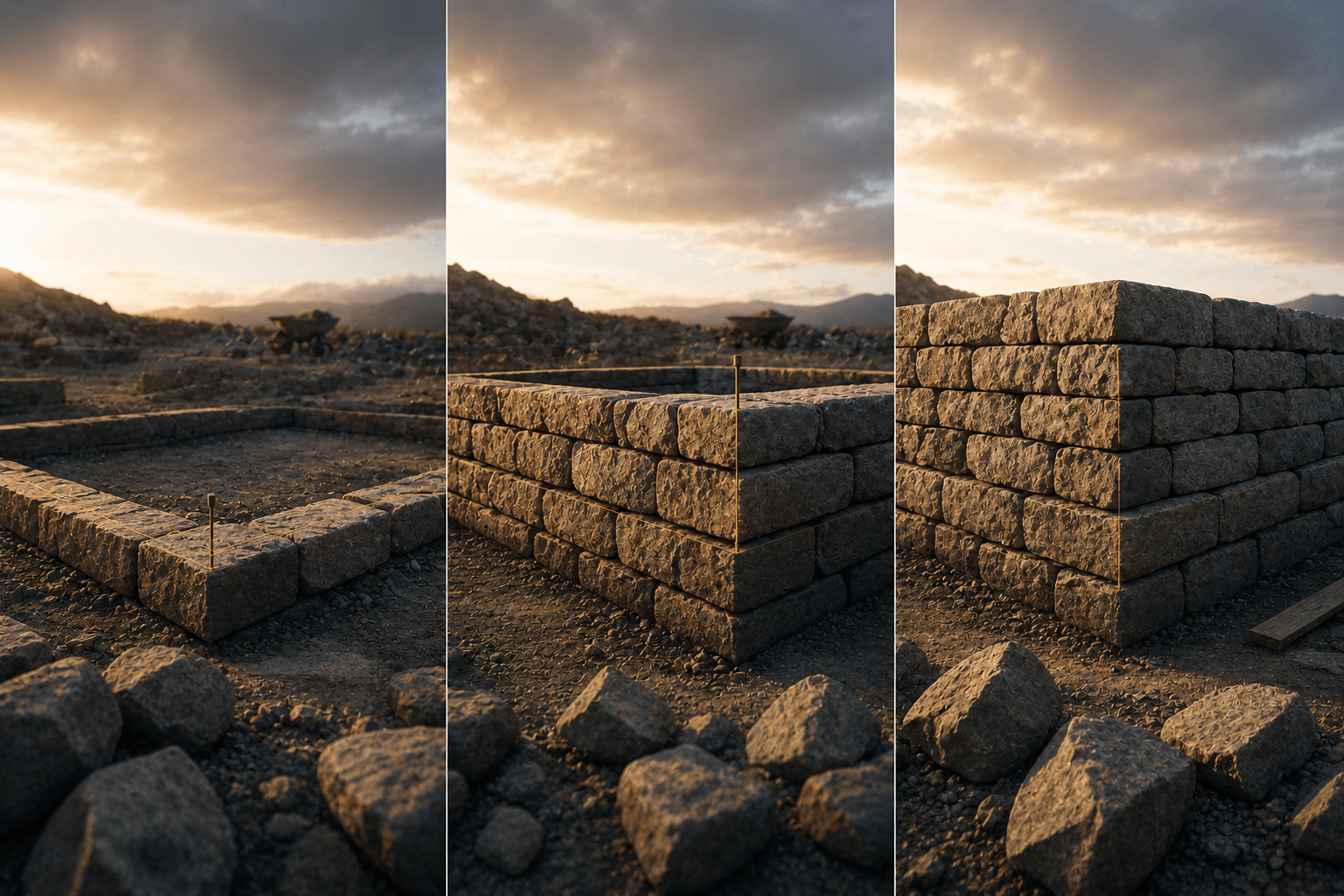
A task is a single action. A job is the whole process those actions serve. Most AI is fluent at the first and silent on the second.

A task is a single action. A job is the whole process those actions serve. Most AI is fluent at the first and silent on the second.

A task is a single action, like drafting an email or pulling a number. A job is the whole connected process those actions live inside, aimed at a business result like the invoice paid or the customer renewed. Chat AI is fluent at tasks and rarely finishes jobs. The test that decides whether AI pays is which one it actually delivers.
You asked the chat tool to draft the email, and it did, in seconds, and it was good. Then you opened the CRM, pulled the context, sent it, logged it, set the reminder, chased the reply two days later, and booked the meeting. The tool did one piece. You did the rest. That is the feeling underneath most of the AI fatigue right now: the work that AI touches keeps getting faster, and the business runs about the same. The honest pain is not that any single tool is bad. It is that something keeps getting done while nothing seems to get finished. JynAI built Works, an AI Business OS, for the second half of that sentence.
A task is a single action: draft the email, summarize the call, pull the numbers. A job is the whole connected process those actions live inside, aimed at a business result: the invoice paid, the campaign shipped, the customer renewed. Chat AI is fluent at tasks. The question that decides whether it pays is whether anything finishes the job.
That distinction is older than AI. The jobs-to-be-done tradition has argued for years that people do not buy a product to perform a step, they hire it to get a whole job done. Harvard Business Review’s canonical statement of it is that when we buy a product we are really hiring it to do a job, and if it does the job well we hire it again. The job is the stable thing. The tasks inside it churn. AI did not change that arrangement. It made the gap between helping with a task and finishing a job visible every week.
Mostly the second, and it matters which. Helping with the work means the AI hands you a piece and you carry it the rest of the way. Doing the work means the AI runs the process from the first action to the result and you direct it. Almost everything sold as AI today does the first.
The usage data shows the shape of it plainly. Anthropic’s Economic Index found AI being used for at least a quarter of the tasks in roughly 36 percent of occupations, but for three-quarters or more of the tasks in only about 4 percent. AI is spread thin across many tasks and almost never owns a whole job. So the honest answer to “is the AI doing the work” is that it is helping with a slice of it, brilliantly, and leaving the connective work to you.
AI is used for at least a quarter of tasks in about 36 percent of occupations, but for three-quarters or more in only about 4 percent.
Anthropic Economic Index, 2025
Because a tool answers a step and a business needs the whole process executed. You can own ten good tools and still not have a single job that runs end to end, because the value was never in any one step. It was in the steps connecting, finishing, and producing a result.
The cleanest number in the research makes the point. One large study estimated that with a language model alone, about 15 percent of worker tasks could be done significantly faster, rising to 47 to 56 percent only once software and tooling are built on top of the model. The model helps with the task. The system around it is what reaches the job. This is the Drafts to Tasks to Outcomes altitude reframe in one statistic: drafts and tasks are the lower rungs, and the run-the-whole-job rung is a different altitude, not a faster version of the same one. On the Three-Layer Pyramid, the tools sit at the bottom and the layer that runs the job sits above them, and that upper layer is the one almost nobody is standing in.
It did one task inside a job that has perhaps a dozen of them. Drafting is one step of “win this deal,” and it is often not even the step that was stuck. The deal was waiting on the follow-up nobody sent, the context nobody logged, the reminder nobody set. A faster draft does not move any of those.
This is where the market’s own vocabulary helps. The industry already separates assistants, which help with a task when you prompt them, from agents, which work toward a goal across steps, and IBM’s explainer draws exactly that line: assistants are reactive and typically need a prompt for each task, while agents break a goal into subtasks and chain them. We do not need to argue about which label a tool deserves. The founder-plain version is the only test that matters: after the AI did its part, did the job close, or are you still the one carrying it between the tools.
When the same system owns every step from the goal to the result: it knows the outcome you want, executes across the apps the work already lives in, hands off between steps without dropping anything, and logs what it produced. Help finishes a job only when there is no human left stitching one task to the next.
Most AI never gets there, and not because the tools are weak. It is because finishing a job is a different kind of thing than doing a task well, the way a finished assembly line is a different thing than a very good drill. A drill is excellent at its one action. It does not build the car. The reason a stack of sharp task tools leaves the business unmoved is that the steps between them, the handoffs and the follow-through, are exactly the part no task tool was built to own.
| Task | Job | |
|---|---|---|
| What it is | One action | The connected process to a result |
| Example | Draft the email | Win and log the deal |
| What AI usually does | Finishes the task | Leaves the job to you |
| What moves | A single step | The business |
If a task tool finishes the task and leaves the job, then the thing worth having is not a better task tool. It is the layer that runs the whole job. That is what Works is built to be. Its Work That Actually Ships capability separates the three modes a founder actually needs, so a workflow does not stop at a plan: it executes across the connected tools, hands off between steps, and ends in ready-to-start items with the artifact already attached, at the autonomy level you set. The job runs from the goal to the result instead of stalling one handoff short.
That capability is the difference between buying a tenth task tool and standing up a job that closes itself, and it is priced so a founder can actually reach it, with the full set unlocked at the $49 tier rather than behind an enterprise contract. We are biased about our own product, of course. The argument underneath it does not need us: if the value was always in the job finishing and not in the task getting done, then more task tools were never going to be the answer.
Stop talking tasks. Get early access for jobs. Or see where your AI sits on the altitude ladder first.
A task is a single action. A job is an outcome. The next time AI impresses you, run the only test that decides whether it paid: did the task get done, or did the job get finished.
Augmenting a task means the AI makes one action faster while you stay in the loop for everything around it, like a sharper draft you still send and log yourself. Automating a job means the AI runs the whole connected process to a result and reports what it did. The first is a faster step; the second is a finished outcome. The line between them is the subject of the map, not the tools.
Because most of them fix tasks, and your business does not run on tasks, it runs on jobs. A tool that drafts faster or summarizes faster improves a step inside a process while leaving the process itself, and the handoffs that stall it, exactly where they were. The fix is not a better tool but a layer that owns the whole job. There is a fuller version of this in when a chat tool is enough and when it is not.
No, and treating them as one is the most common AI mistake a founder makes. A finished task is a completed step. A finished job is the connected set of steps that reaches a business result. You can finish every task and still not finish the job if nothing carries the work across the gaps between them. The same gap shows up in the difference between doing your work faster and doing work you could not do before.
Look at the output unit, not the activity count. If the number the business runs on, revenue, renewals, closed deals, has not changed, the AI finished tasks, not the job. A task finishes a step; a job finishes with a receipt. The tell is whether the result moved, not whether the draft was good.
Jobs-to-be-done, articulated by Clayton Christensen at Harvard Business School, holds that people hire products to complete a whole job, not to execute a single step. Applied to AI, it reveals the gap precisely: tools are optimized for tasks, which are the steps inside the job, while the job, the stable outcome people actually hired AI for, goes unfinished. That mismatch is why a faster step rarely moves the business.
Simplify your AI journey with solutions that integrate seamlessly, empower your teams, and deliver real results. Jyn turns complexity into a clear path to success.