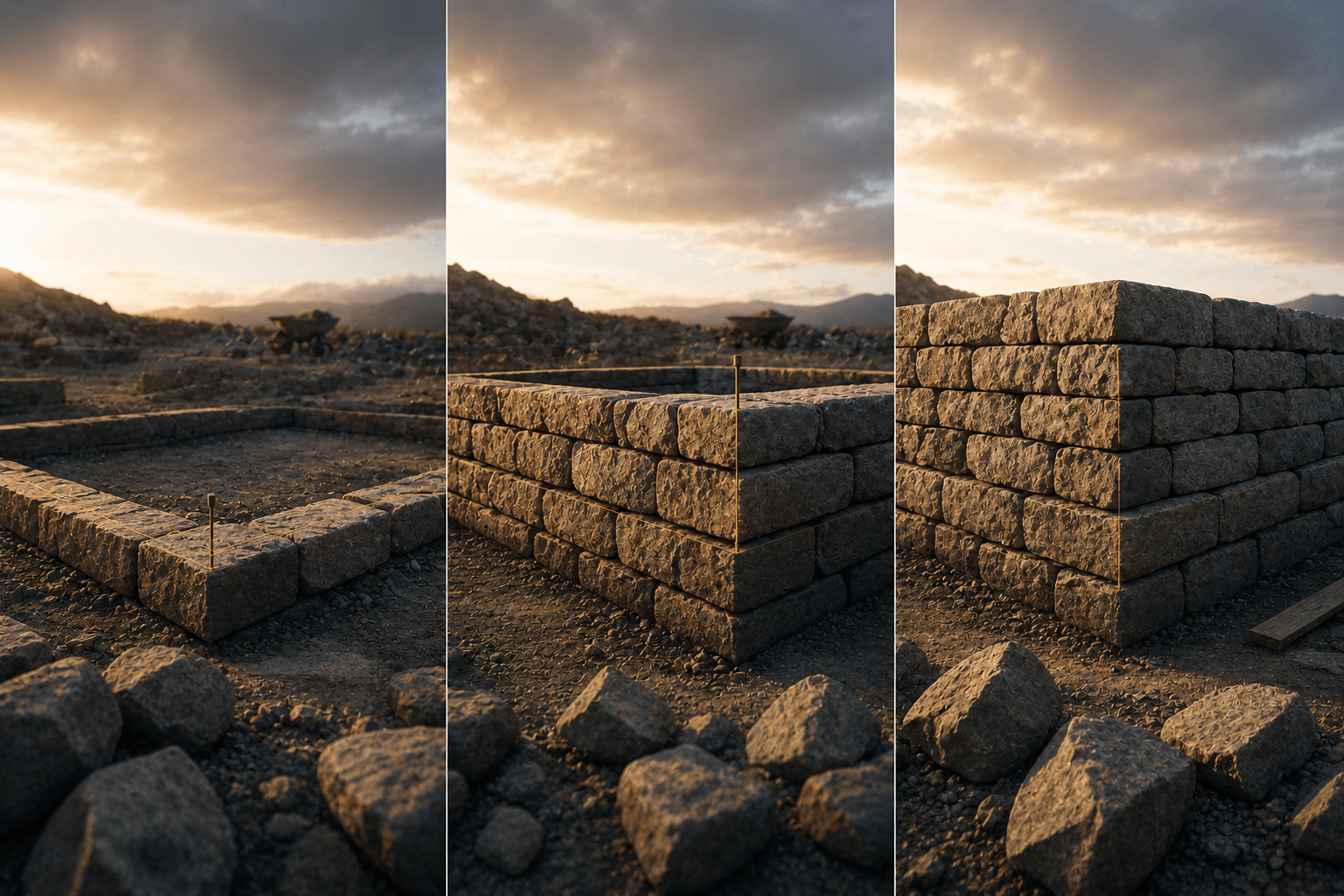
Tools are stops. The map is the route between them. The part that decides whether AI pays is the one nobody sells as a product.

Tools are stops. The map is the route between them. The part that decides whether AI pays is the one nobody sells as a product.
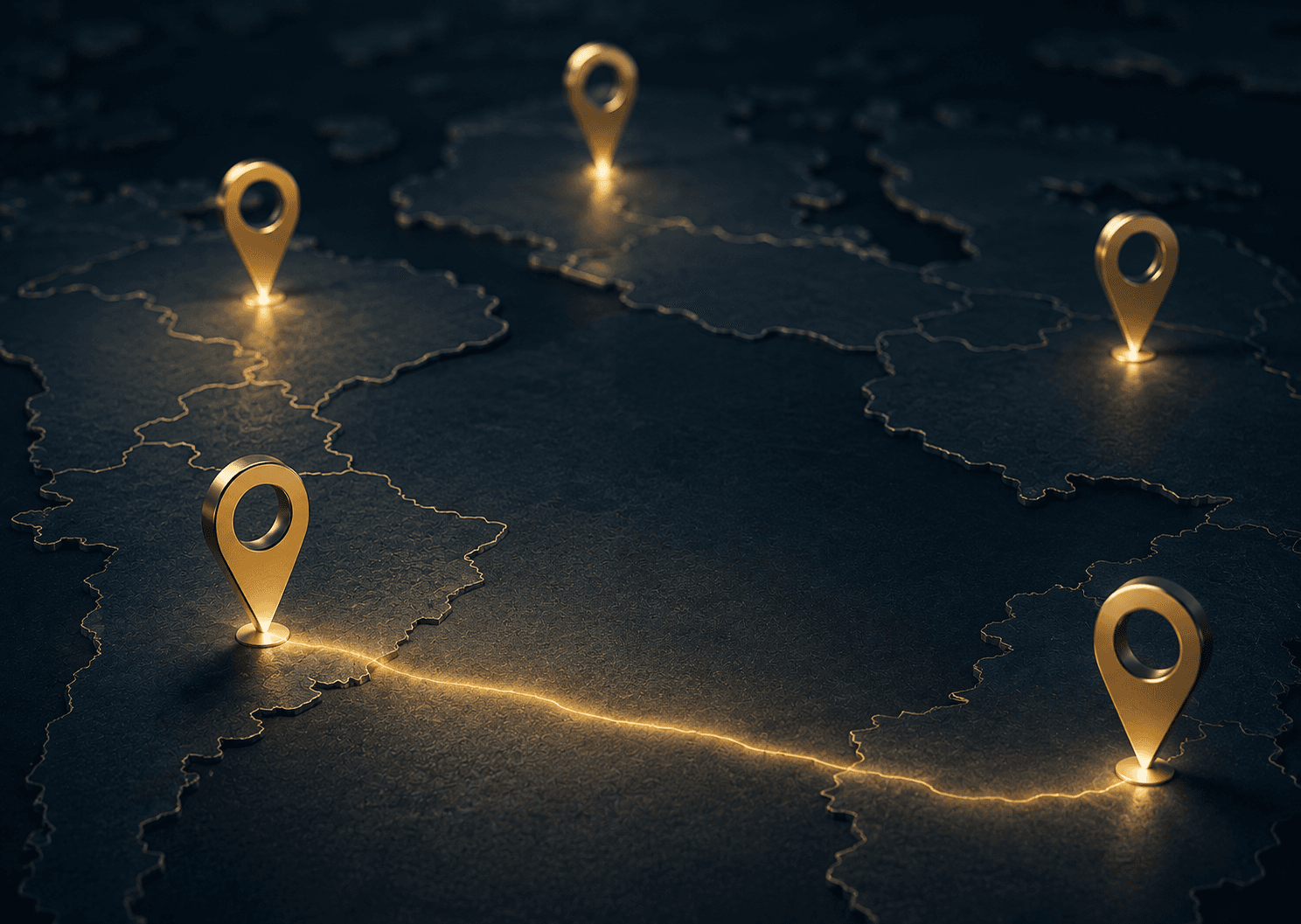
Founders keep buying the next AI tool and still feel behind because tools are stops and nobody is holding the map of how the work flows between them. The route, not the apps, is what reaches a result. It is the part no vendor sells as a product, which is exactly why it gets skipped.
You added another AI tool last quarter, and another before that, and you still feel behind. The drawer is full of apps that each work, the bill keeps climbing, and the business runs about the same. The instinct is to find the missing one, the tool everyone on LinkedIn swears by. That instinct is the trap. The reason the tools never add up is not that you picked the wrong ones. It is that nobody is holding the map. JynAI built Works, an AI Business OS, to be the thing that holds it.
Because tools are stops and a stack of stops is not a route. Each tool finishes one step, and the work only reaches a result when the steps connect into a flow that runs from a goal to a finished outcome. Adding another stop does not draw that route. It just adds one more place the work can stall at a handoff nobody mapped.
You can see it in the field most clearly where the budgets are largest. In a survey of large companies, Camunda found that while most leaders say they use AI agents, only 11 percent of agentic use cases reached production in the past year, and 80 percent admit most of their agents are really chatbots that summarize or answer rather than run a process. Plenty of tools. Almost no running process. The tools were not the constraint. The route was.
A tool is a destination: a place the work stops to get one thing done. The map is the route between the destinations, the order, the handoffs, the way a lead becomes a closed deal becomes a renewed customer. You can own every stop on a journey and still not have the journey, because the value was never in any single stop. It was in the line connecting them.
The process-mining market leader put this in a sentence worth keeping. In a survey of large companies, Celonis found 89 percent of leaders saying AI without an understanding of how the business runs fails to deliver, and its co-founder framed it exactly as this cluster does.
AI agents need to be process aware, just like a GPS needs a map.
Alex Rinke, Celonis, 2025
A GPS with no map is a screen full of capability that cannot get you anywhere. That is a stack of AI tools with no process spine. The capability is real and the route is missing, so the work never arrives.
Designing how the work flows, and it is not a close call. This is the oldest finding in the field. Michael Hammer argued in 1990 that companies rarely get real improvement from technology because they use it to speed up the work they already do instead of redesigning the work. Pave the old path with a faster machine and you get the old result, slightly quicker. The gains come from redrawing the route.
This is the part of the Three-Layer Pyramid founders keep skipping. The tools live at the bottom layer, and the map, the process spine that runs across them, is the layer almost nobody buys, because nobody sells it as a product you can purchase. On the Drafts to Tasks to Outcomes ladder it is the same story from the side: the map sits at the process rung above the task tools, and a pile of faster tasks never climbs to it on its own. Choosing tools feels like progress because a tool is a thing you can buy in an afternoon. Designing the flow is work, and it is the work that actually pays.
It looks like a route, not a list. The next tool is a stop you could add. The whole operation is the line the work travels: the goal, the steps in order, the handoffs between them, the result at the end, and the record of what happened. When you can see that line, you stop asking which tool to add next and start asking which part of the route is broken.
The economists explain why the route gets underfunded. The productivity J-curve research shows that the technology is the cheap part and the complementary redesign, the new processes the technology requires, is the expensive, invisible investment that never shows up as a line item and so never gets scheduled. The hundred hours of deciding how the work should flow is the investment that never appears on the invoice, which is exactly why tool-shopping always looks cheaper than it is.
| A tool (a stop) | The map (the route) | |
|---|---|---|
| What it is | One step, done | The flow from goal to result |
| What you buy | A destination | The journey the stops serve |
| Shows up on the invoice | Yes | No, which is why it gets skipped |
| What it moves | One step | The whole operation |
If the route is the part that pays and no vendor sells it as a product, then the thing worth having is a layer that holds the map for you. That is the plain case for what Works is, whether or not you ever open it. Its Works Across Your Stack capability reaches the apps the work already lives in, and the Work That Actually Ships capability runs the process across them, so the route, the order and the handoffs and the result, lives in the system instead of in your head or a drawer of disconnected tools.
The map is not a deliverable you maintain. It is the line the system runs on, and the hundred hours you would otherwise spend re-deciding the flow every quarter is what it gives back. It is priced so a founder can reach it, with the full capability set unlocked at the $49 tier rather than behind an enterprise contract. We are biased about our own product, of course. The argument underneath it does not need us: if the value was always in the route and not the stops, then the next tool was never going to be the answer.
Stop buying more tools. Get the map. Get early access. Or see where your work flows and stalls today first.
Stop buying destinations. Buy the map. The next time you reach for the next tool, ask what it is actually a stop on, and whether anyone has drawn the route.
Because each tool you buy is one more stop, and stops do not connect themselves into a route. The thing that would actually move the business, the process running from goal to result, is not for sale as a product, so you keep reaching for the next purchasable thing and the gap stays open. The fix is a layer that holds the route, not a fuller drawer. The handoff side of this is covered in five tools, five tasks, and the work that falls between them.
It is the opposite. The map is not a document you draw and maintain; it is the route the system runs on, drawn once and then run, so the hundred hours you currently spend re-deciding the flow every quarter is exactly what it saves. The overhead is what you are paying now, invisibly, by holding the route in your own head. The one-place version of this is in one place, not five to eight tools.
Almost always the map. A founder-led business rarely fails for lack of a tool; it fails because the work stalls between the tools it already has. The map is the process spine that closes those gaps, and it is the difference between a task that gets done and a job that finishes, which is the subject of is AI doing the task or finishing the whole job.
Because value accumulates in the line between steps, not in the steps themselves. Even the best tool at each stop leaves the work stalled at every handoff between stops. The complementary-redesign research shows this is not an AI problem: it predates AI by decades and the missing piece is always the same, no one budgeted the route that connects the stops into a result.
The J-curve research shows that technology is the cheap part of a transformation and the complementary redesign, the new processes the technology requires, is the expensive, invisible investment that never shows up on the invoice. AI is following the same curve: the tools land fast and cheaply, and the route that makes them compound never gets budgeted because nobody sells it as a product.
Keep reading:
Simplify your AI journey with solutions that integrate seamlessly, empower your teams, and deliver real results. Jyn turns complexity into a clear path to success.