Mar 26, 2026


Are you using data, or is your data using you? Many businesses sit on valuable data but struggle to turn it into action. The benefits of AI for businesses show how you can convert raw data into clear decisions and faster outcomes. Curious how this drives real AI business transformation? Scroll below and read the blog.
Artificial Intelligence in business refers to the use of advanced algorithms and computational models to process large volumes of data, identify patterns and support decision-making. It is no longer treated as a future concept. It now plays a central role in how organizations operate, compete and grow. Businesses are shifting from questioning adoption to focusing on how to integrate AI in a way that aligns with strategy, workflows and long-term goals. When implemented thoughtfully, AI helps you improve efficiency, respond faster to change and extract meaningful value from data. Platforms like JynAI support this shift by automating tasks, turning data into decision-ready insights, and enabling faster execution without complex setup.
AI systems do not replicate human thinking, but they can process and analyze data at a scale and speed that humans cannot match. These systems rely on methods such as machine learning, deep learning and neural networks, and they require human oversight to guide outcomes, maintain data quality and reduce bias. In a business setting, AI becomes a practical tool for handling growing data streams from customers, partners and internal operations.
AI technologies can be grouped based on how they solve business problems:
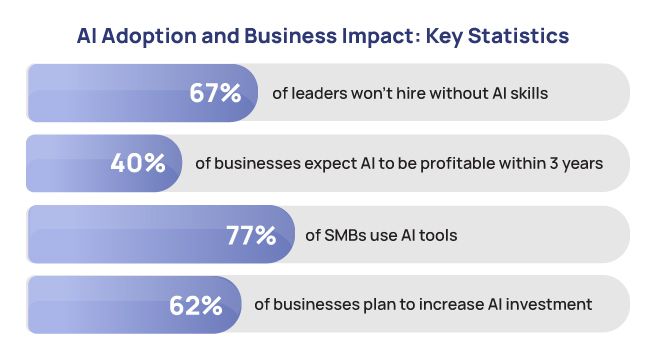
AI in business improves how organizations operate, decide, and grow. It uses data to guide actions, reduces manual effort, enhances customer interactions, and supports long-term planning. These capabilities work together to create smoother operations and stronger outcomes.
Here’s how AI helps businesses turn everyday processes into measurable progress:
AI processes large volumes of data and turns them into meaningful insights. It highlights trends, risks, and possible outcomes, allowing decision-makers to act with clarity rather than assumption. With tools like JynAI, scattered data is brought together and refined, making insights more reliable and easier to act on. This leads to faster decisions backed by consistent and trustworthy information.
AI automates repetitive tasks such as data entry, reporting, and scheduling. This shift allows employees to focus on strategic and creative responsibilities while improving speed and reducing errors. Tools that integrate easily into existing workflows, like JynAI, reduce setup time and avoid disruption to daily operations. As a result, work continues smoothly while efficiency improves in the background.
AI analyzes customer behavior and preferences to tailor interactions. It enables timely responses, accurate recommendations, and consistent communication across channels. This level of personalization strengthens engagement and improves overall customer satisfaction without adding extra workload.
AI reduces dependence on manual processes and minimizes costly errors. It also improves how resources like time, inventory, and energy are allocated. Scalable platforms such as JynAI support growth without heavy upfront investment, making it easier to control spending while expanding capabilities. This balance helps organizations achieve steady progress without overspending.
AI identifies unusual patterns and flags potential issues in advance. It supports monitoring across security, compliance, and operations, allowing organizations to act before problems escalate. With explainable tools like JynAI, decisions are transparent and easier to understand, which builds trust and supports better governance.
AI supports idea generation, concept testing, and pattern recognition. It shortens development cycles and helps uncover opportunities that may not be visible through traditional methods. This allows organizations to experiment, adapt, and bring new ideas to market with less delay.
AI uses historical data to anticipate future trends and outcomes. It supports better planning across areas like demand, workforce, and strategy. Platforms like JynAI connect outcomes directly to business goals, making results measurable and easier to track over time. This clarity helps maintain focus on long-term growth while adapting to change.
AI tools can run continuously without fatigue, handling tasks at any time of day. This supports faster response times, consistent performance, and the ability to manage high workloads without delays. It also helps organizations maintain service levels during peak demand.
AI performs tasks with consistency, reducing the chances of human error in areas like data handling, calculations, and reporting. It can also detect inconsistencies and correct them early. This leads to cleaner data and more dependable outputs across operations.
AI connects day-to-day activities with larger business objectives by tracking performance and outcomes. It helps teams stay aligned by showing what is working and what needs adjustment. With tools like JynAI, results are tied directly to goals, making progress easier to measure and refine over time.
AI adoption in business requires a structured and intentional approach that aligns technology with organizational goals. Success depends on integrating strategy, data, governance, and workforce capabilities into a cohesive framework. When implemented systematically, AI becomes embedded in core operations rather than remaining a standalone initiative.
Let’s explore the key strategies:
Successful AI programs begin with a clear link between AI use cases and business priorities such as efficiency, customer engagement, and risk control. Organizations focus on identifying areas where AI can influence measurable outcomes rather than adopting it broadly without direction.
At the same time, data is positioned as a shared organizational asset. Controlled accessibility across functions enables better collaboration and decision-making. Establishing standards for transparency and accountability further strengthens confidence in AI-driven processes.
Platforms like JynAI Works support this alignment by connecting business tools across functions and automating workflows, helping organizations translate strategic goals into operational execution.
AI systems require infrastructure that supports flexibility across different environments. An adaptive setup allows workloads to operate across cloud platforms, private systems, and edge environments based on performance and data sensitivity needs.
Reducing data silos plays a key role here. Integrating data sources into a unified layer improves accessibility and speeds up development cycles, allowing AI initiatives to scale across departments without friction.
JynAI Works contributes in this area by unifying systems such as CRM, HR, and finance tools into a single platform, enabling smoother data flow and reducing fragmentation.
Reliable AI outcomes depend on consistent and accurate data inputs. Organizations emphasize capturing relevant data at critical operational points and preparing it through cleaning and standardization processes before model use.
Continuous management includes updating datasets, maintaining pipelines, tracking data versions, and monitoring for changes that may impact model accuracy. These practices help maintain stability and consistency in AI outputs over time.
Structured oversight defines how data and AI systems operate within the organization. Clear policies govern access, usage, and data movement, creating transparency across workflows.
Addressing ethical concerns such as bias, privacy, and regulatory requirements early in the process reduces potential risks. Making AI decisions traceable and understandable supports wider acceptance, especially in high-impact business functions.
AI integration relies on building capabilities across both technical and business teams. Organizations focus on developing a practical understanding of AI tools, helping teams identify relevant AI business applications and interpret outputs effectively.
Collaboration between domain experts and technical specialists improves implementation quality. Encouraging experimentation supports continuous improvement and helps integrate AI into routine business activities.
Tools like JynAI Works can accelerate adoption by simplifying how teams interact with AI, automating routine workflows and delivering insights that support faster, informed decisions.
AI adoption progresses through incremental stages, beginning with well-defined, rule-based processes that offer clear outcomes. Early implementations provide insights that inform broader deployment strategies.
Organizations form dedicated teams to evaluate use cases, select appropriate solutions, and measure performance against defined metrics. Continuous evaluation and refinement support controlled scaling and long-term integration of AI across the enterprise.
In this phase, platforms such as JynAI Works help streamline implementation by automating repetitive processes and providing actionable insights, allowing teams to scale AI usage without adding operational complexity.
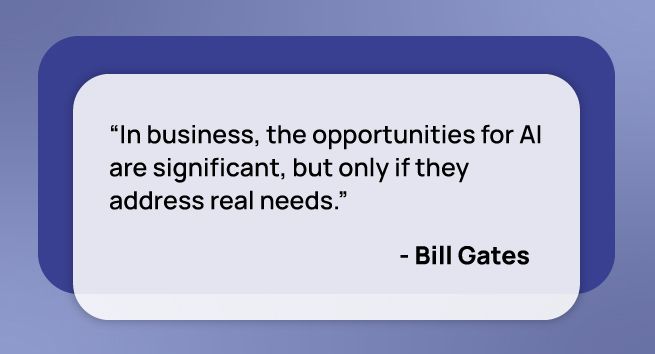
AI in business is moving from experimentation to real, measurable impact as companies adopt an AI-first mindset. Over the next five years, you will see faster adoption across key areas, driven largely by agentic AI, where systems act as autonomous collaborators that can plan, reason, adapt, and execute tasks with minimal oversight. This shift allows you to run processes continuously, make faster decisions, and operate at a much larger scale.
Here’s how this shift is shaping business outcomes:
At the same time, results depend on strong data foundations, skilled teams, and clear governance. Many businesses still struggle with integration, talent gaps, and unclear ROI. Those that focus on practical use cases and disciplined deployment are starting to see real competitive advantage. JynAI Works help you take that step, letting you connect your existing systems, gain clear insights, and apply AI in your daily workflows without added complexity, so you can move from experimentation to real business outcomes faster.
Ready to take the next step?
Get in touch with JynAI to see how you can apply AI in your business with clarity and control. Sign up today and start building practical, results-driven AI into your daily operations.
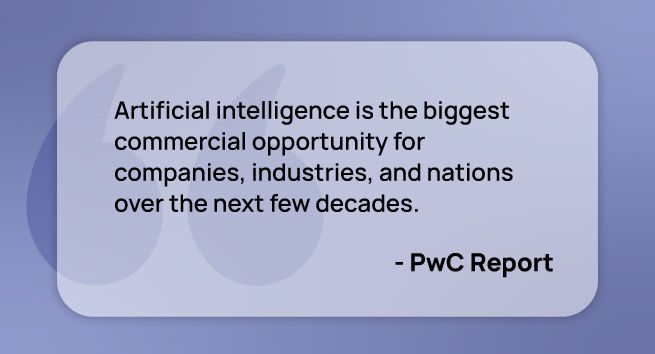
Artificial intelligence helps businesses grow by improving efficiency, reducing operational costs, and enabling faster decision-making. It also supports data-driven strategies that identify new opportunities and optimize customer experiences.
The benefits of AI in business include automation of repetitive tasks, improved accuracy, and enhanced customer insights. It also enables better forecasting and personalization, which can lead to increased revenue and customer retention.
Businesses are adopting AI to stay competitive and respond quickly to market changes. It allows organizations to process large volumes of data and gain actionable insights that traditional methods cannot deliver as efficiently.
Companies should use AI productivity tools to streamline operations, reduce human error, and improve productivity. These tools also support innovation by enabling new products, services, and business models.
Industries such as healthcare, finance, retail, manufacturing, and logistics benefit most from AI due to their reliance on data and process optimization. These sectors use AI to enhance decision-making, improve efficiency, and deliver better customer outcomes.
Simplify your AI journey with solutions that integrate seamlessly, empower your teams, and deliver real results. Jyn turns complexity into a clear path to success.