Your AI Is a Brilliant Spell-Checker for Everything

Real help at the task in front of you, silent on the job around it. Why that is the point, not the problem.

Technology
By Mark Choudhari · Jun 7, 2026 · 5 min read

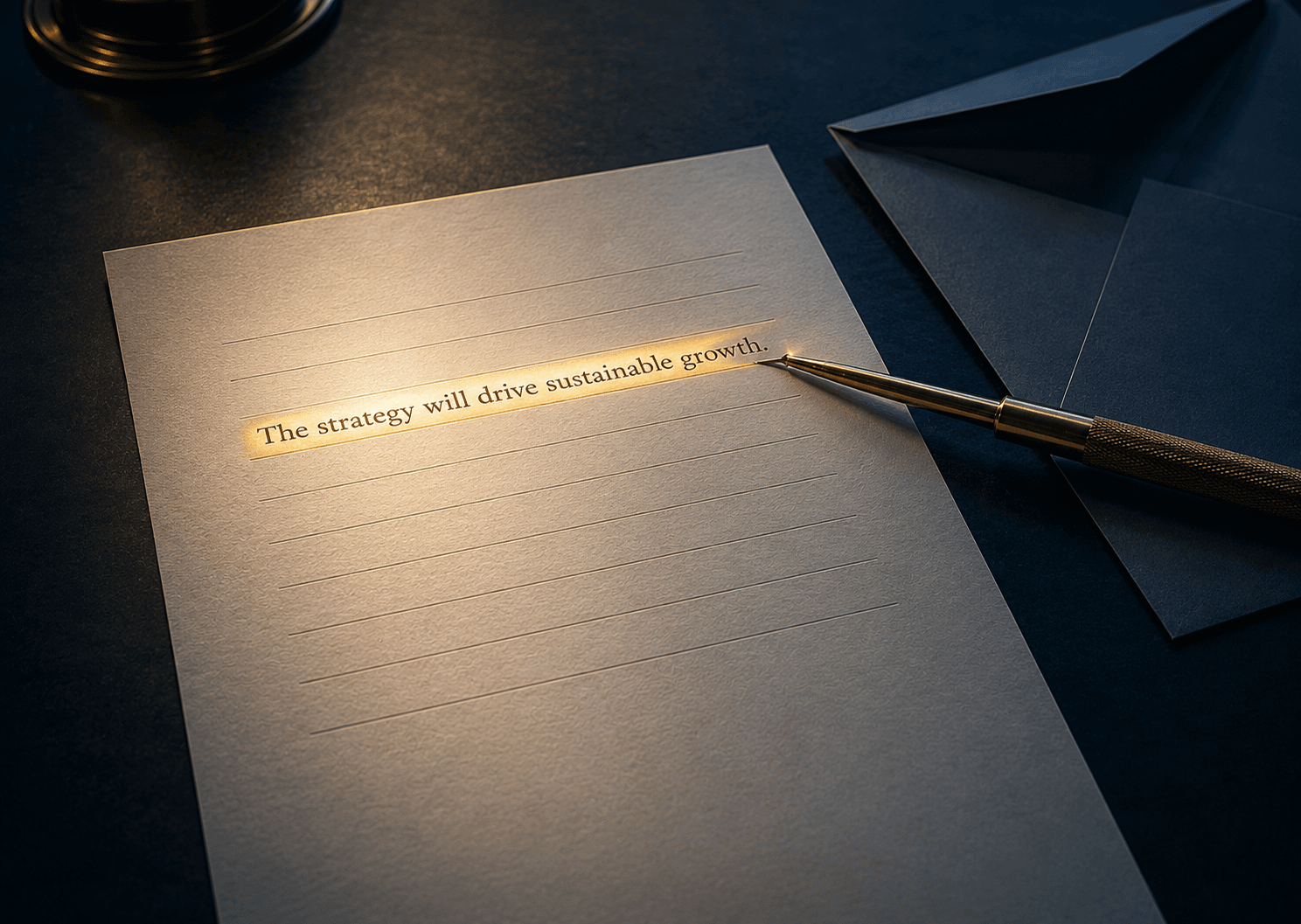
Every sentence a little better. The letter still not sent.
Made with Works

TL;DR

A spell-checker makes every sentence a little better and never gets the letter sent. Today’s chat AI is a spell-checker for everything: genuinely useful at the task in front of you, silent on the job around it. The analogy compares scope, not intelligence. Inside its scope the assist is a measurable speed-up; outside its scope it quietly degrades judgment. You do not fire the spell-checker. You stop expecting it to run the newsroom.

In this article

A spell-checker makes every sentence a little better and never gets the letter sent. That is not a knock on spell-checkers. It is an exact description of what they are for. They catch and they suggest, at the level of the word, and they leave the writing, the deciding, and the sending to you. Today’s chat AI is the same shape at a much larger scale, which is why it can feel both indispensable and oddly disappointing at once. It is a spell-checker for everything.

Is AI just a smarter spell-checker for my business?

In scope, yes, and that is more useful than it sounds. A spell-checker for everything is a genuine help at the task in front of you: the draft, the summary, the bit of code, the rewrite. The analogy is not an insult, and it is not about intelligence. A chat tool is vastly smarter than a spell-checker. It is the same in scope. Both catch and suggest at the level of the task, and both go quiet at the level of the job, which is the work around the task: getting it sent, chased, decided, and shipped. Calling AI a spell-checker for everything is not saying it is dumb. It is saying it lives on one rung of the ladder, the task rung, and the rung above it, the outcome, is a different job entirely.

Real help, bounded scope

The reason the analogy holds up is that the spell-checker is one of the most-studied assistive tools in computing, and its research record maps almost one to one onto what we are now learning about AI. The classic experiment found that checkers genuinely help on the errors they catch, and that people over-trust them. With the checker on, the most verbally skilled writers left nearly twice as many uncaught errors behind, losing their skill edge entirely (Communications of the ACM, Galletta et al., 2005). Real help inside its scope, quiet damage just outside it. The pattern was documented two decades before the chat tools arrived.

The AI evidence keeps both halves, and the honest version always does. Inside its scope, task-level AI is a real accelerator: in a controlled experiment, developers using an AI pair programmer finished a bounded task 55.8% faster than the control group (Peng et al., 2023). That speed-up is real and worth having. But scope is the hinge. In a preregistered field study of 758 consultants, the same AI delivered more tasks, faster, at higher quality inside the frontier of what it does well, and on a task chosen to sit just outside that frontier, AI users were 19 percentage points less likely to get it right (Dell’Acqua et al., 2023).

With the spell-checker on, the most verbally skilled writers left nearly twice as many uncaught errors behind.
Communications of the ACM, Galletta et al., 2005

So the assist that speeds you up in scope can quietly cost you out of scope, and the better it feels the harder that is to spot. None of this makes the assist bad. It makes the assist exactly what it claims to be: help at the task, not ownership of the outcome.

If the tool only catches and suggests, who is doing the actual work?

You are, or no one is. That is the uncomfortable middle of the spell-checker analogy. A tool that catches and suggests improves the artifact and hands it back. Someone still has to carry the artifact to the finish: send the thing, log it, chase the reply, decide the next step, ship the result. On the Drafts to Tasks to Outcomes ladder, the spell-checker lives on the task rung. The outcome rung is the job, and it does not run itself just because the draft got better.

The deepest version of this is forty years old and worth reading slowly. The more of the work you automate, the more the human’s leftover role matters, and the easier it is to design that role badly (Bainbridge, 1983). Automate the catching and the suggesting, and a person is still standing there holding the part that finishes the job, often with less practice at it than before. The work did not disappear. It moved to the seam between the assist and the outcome, and that seam is where things quietly stall.

Why does AI feel like an assistant that never finishes the job?

Because, in the spell-checker sense, it is one, and that was never a flaw. An assistant that catches and suggests is doing precisely the job it was built for. The frustration is not the tool falling short. It is the expectation being aimed one rung too high. When every sentence gets a little better and the outcome sits exactly where it started, the assist worked and the job still needs an owner.

A spell-checker for everything is a genuine help at the task. It was never the thing that gets the letter sent.

Here is the bar that the analogy points at by its absence. The job needs something that owns the outcome, not just the sentence: that runs the work end to end rather than handing back a step, that acts across the tools the work actually lives in, and that does it at an autonomy level you control. That is the rung JynAI built Works to run on. Where a task tool catches and suggests, Work That Actually Ships separates planning, execution, and hands-free automation, so the draft does not just improve, the work gets sent, logged, and chased to a result. Works reaches the tools you already use, 3,000 and more, so the job runs where it lives, and every run is logged and versioned, which is how you know the outcome moved instead of assuming it did. At the reference deployment, Machintel, the system went live across six teams in 90 days, after roughly two years of task-level experiments that never became an operation.

That is not firing the spell-checker. The assist still earns its keep at the task, every day. It is putting a system where the job lives, and holding the assist to the scope it was always honest about.

Use the right tool for the work. Get early access. Want the altitude underneath this first? The task-versus-job breakdown defines exactly when helping with a task finishes the job, and the chat-tool-versus-system decision rule tells you which tool a given piece of work belongs in.

Keep the assist. Hold it to its scope. A spell-checker makes every sentence a little better, and something else has to get the letter sent.

Common Questions

Is AI just a smarter spell-checker for my business?

In scope, yes, and that framing is more useful than it sounds. The spell-checker analogy compares scope, not intelligence: a spell-checker is excellent within a word, useless at sending the letter. Today’s chat AI is excellent within a task and silent on the job around it, the sending, the chasing, the shipping. The practical value of naming this is that it sets the right expectation, real help on the sentence, not a substitute for the system that gets the letter out.

If the tool only catches and suggests, who is doing the actual work?

You are, unless a system is. The assist improves the artifact and hands it back; someone still has to finish the job. The classic warning is that automating the easy parts leaves a person holding the hardest leftover part with the least practice (Bainbridge, 1983). The fix is not a smarter assist. It is a system that owns the outcome.

Does using the assist make me worse at the work?

It can, just outside its scope, which is why the caveat matters. With a spell-checker on, skilled writers left nearly twice as many uncaught errors behind (Galletta et al., 2005). The lesson is not to drop the assist. It is to keep it inside the scope it is honest about and not lean on it for the judgment it never owned.

When does helping with a task actually finish the job?

When something owns the outcome, not just the artifact. Helping ends at the better draft; finishing means the work got sent, chased, and shipped. The full definition of where a task ends and a job begins lives in the task-versus-job breakdown.

Why does AI feel so useful and still leave the business unmoved?

Because task-level assistance and job-level ownership are different rungs, and the research puts numbers on the gap. Developers using an AI pair programmer finished bounded tasks 55.8 percent faster, yet in the same period the Atlassian survey found 89 percent of executives reporting faster work while only 6 percent could name a business-wide return. The rung is real; the business runs on the higher one, and the assist was never built to reach it.

Get Started With AI

Are You Ready to Make AI Work for You?

Simplify your AI journey with solutions that integrate seamlessly, empower your teams, and deliver real results. Jyn turns complexity into a clear path to success.

See AI for Real Business Impact in Action →

ai that powers your team 226d8ee5db

Your AI Is a Brilliant Spell-Checker for Everything

Real help at the task in front of you, silent on the job around it. Why that is the point, not the problem.
Technology
By Mark Choudhari · Jun 7, 2026 · 5 min read

Every sentence a little better. The letter still not sent.
Made with Works

TL;DR

A spell-checker makes every sentence a little better and never gets the letter sent. Today’s chat AI is a spell-checker for everything: genuinely useful at the task in front of you, silent on the job around it. The analogy compares scope, not intelligence. Inside its scope the assist is a measurable speed-up; outside its scope it quietly degrades judgment. You do not fire the spell-checker. You stop expecting it to run the newsroom.

In this article

A spell-checker makes every sentence a little better and never gets the letter sent. That is not a knock on spell-checkers. It is an exact description of what they are for. They catch and they suggest, at the level of the word, and they leave the writing, the deciding, and the sending to you. Today’s chat AI is the same shape at a much larger scale, which is why it can feel both indispensable and oddly disappointing at once. It is a spell-checker for everything.

Is AI just a smarter spell-checker for my business?

In scope, yes, and that is more useful than it sounds. A spell-checker for everything is a genuine help at the task in front of you: the draft, the summary, the bit of code, the rewrite. The analogy is not an insult, and it is not about intelligence. A chat tool is vastly smarter than a spell-checker. It is the same in scope. Both catch and suggest at the level of the task, and both go quiet at the level of the job, which is the work around the task: getting it sent, chased, decided, and shipped. Calling AI a spell-checker for everything is not saying it is dumb. It is saying it lives on one rung of the ladder, the task rung, and the rung above it, the outcome, is a different job entirely.

Real help, bounded scope

The reason the analogy holds up is that the spell-checker is one of the most-studied assistive tools in computing, and its research record maps almost one to one onto what we are now learning about AI. The classic experiment found that checkers genuinely help on the errors they catch, and that people over-trust them. With the checker on, the most verbally skilled writers left nearly twice as many uncaught errors behind, losing their skill edge entirely (Communications of the ACM, Galletta et al., 2005). Real help inside its scope, quiet damage just outside it. The pattern was documented two decades before the chat tools arrived.

The AI evidence keeps both halves, and the honest version always does. Inside its scope, task-level AI is a real accelerator: in a controlled experiment, developers using an AI pair programmer finished a bounded task 55.8% faster than the control group (Peng et al., 2023). That speed-up is real and worth having. But scope is the hinge. In a preregistered field study of 758 consultants, the same AI delivered more tasks, faster, at higher quality inside the frontier of what it does well, and on a task chosen to sit just outside that frontier, AI users were 19 percentage points less likely to get it right (Dell’Acqua et al., 2023).

With the spell-checker on, the most verbally skilled writers left nearly twice as many uncaught errors behind.
Communications of the ACM, Galletta et al., 2005

So the assist that speeds you up in scope can quietly cost you out of scope, and the better it feels the harder that is to spot. None of this makes the assist bad. It makes the assist exactly what it claims to be: help at the task, not ownership of the outcome.

If the tool only catches and suggests, who is doing the actual work?

You are, or no one is. That is the uncomfortable middle of the spell-checker analogy. A tool that catches and suggests improves the artifact and hands it back. Someone still has to carry the artifact to the finish: send the thing, log it, chase the reply, decide the next step, ship the result. On the Drafts to Tasks to Outcomes ladder, the spell-checker lives on the task rung. The outcome rung is the job, and it does not run itself just because the draft got better.

The deepest version of this is forty years old and worth reading slowly. The more of the work you automate, the more the human’s leftover role matters, and the easier it is to design that role badly (Bainbridge, 1983). Automate the catching and the suggesting, and a person is still standing there holding the part that finishes the job, often with less practice at it than before. The work did not disappear. It moved to the seam between the assist and the outcome, and that seam is where things quietly stall.

Why does AI feel like an assistant that never finishes the job?

Because, in the spell-checker sense, it is one, and that was never a flaw. An assistant that catches and suggests is doing precisely the job it was built for. The frustration is not the tool falling short. It is the expectation being aimed one rung too high. When every sentence gets a little better and the outcome sits exactly where it started, the assist worked and the job still needs an owner.

A spell-checker for everything is a genuine help at the task. It was never the thing that gets the letter sent.

Here is the bar that the analogy points at by its absence. The job needs something that owns the outcome, not just the sentence: that runs the work end to end rather than handing back a step, that acts across the tools the work actually lives in, and that does it at an autonomy level you control. That is the rung JynAI built Works to run on. Where a task tool catches and suggests, Work That Actually Ships separates planning, execution, and hands-free automation, so the draft does not just improve, the work gets sent, logged, and chased to a result. Works reaches the tools you already use, 3,000 and more, so the job runs where it lives, and every run is logged and versioned, which is how you know the outcome moved instead of assuming it did. At the reference deployment, Machintel, the system went live across six teams in 90 days, after roughly two years of task-level experiments that never became an operation.

That is not firing the spell-checker. The assist still earns its keep at the task, every day. It is putting a system where the job lives, and holding the assist to the scope it was always honest about.

Use the right tool for the work. Get early access. Want the altitude underneath this first? The task-versus-job breakdown defines exactly when helping with a task finishes the job, and the chat-tool-versus-system decision rule tells you which tool a given piece of work belongs in.

Keep the assist. Hold it to its scope. A spell-checker makes every sentence a little better, and something else has to get the letter sent.

Common Questions

Is AI just a smarter spell-checker for my business?

In scope, yes, and that framing is more useful than it sounds. The spell-checker analogy compares scope, not intelligence: a spell-checker is excellent within a word, useless at sending the letter. Today’s chat AI is excellent within a task and silent on the job around it, the sending, the chasing, the shipping. The practical value of naming this is that it sets the right expectation, real help on the sentence, not a substitute for the system that gets the letter out.

If the tool only catches and suggests, who is doing the actual work?

You are, unless a system is. The assist improves the artifact and hands it back; someone still has to finish the job. The classic warning is that automating the easy parts leaves a person holding the hardest leftover part with the least practice (Bainbridge, 1983). The fix is not a smarter assist. It is a system that owns the outcome.

Does using the assist make me worse at the work?

It can, just outside its scope, which is why the caveat matters. With a spell-checker on, skilled writers left nearly twice as many uncaught errors behind (Galletta et al., 2005). The lesson is not to drop the assist. It is to keep it inside the scope it is honest about and not lean on it for the judgment it never owned.

When does helping with a task actually finish the job?

When something owns the outcome, not just the artifact. Helping ends at the better draft; finishing means the work got sent, chased, and shipped. The full definition of where a task ends and a job begins lives in the task-versus-job breakdown.

Why does AI feel so useful and still leave the business unmoved?

Because task-level assistance and job-level ownership are different rungs, and the research puts numbers on the gap. Developers using an AI pair programmer finished bounded tasks 55.8 percent faster, yet in the same period the Atlassian survey found 89 percent of executives reporting faster work while only 6 percent could name a business-wide return. The rung is real; the business runs on the higher one, and the assist was never built to reach it.

Get Started With AI

Are You Ready to Make AI Work for You?

Simplify your AI journey with solutions that integrate seamlessly, empower your teams, and deliver real results. Jyn turns complexity into a clear path to success.


See AI for Real Business Impact in Action →

ai that powers your team 226d8ee5db