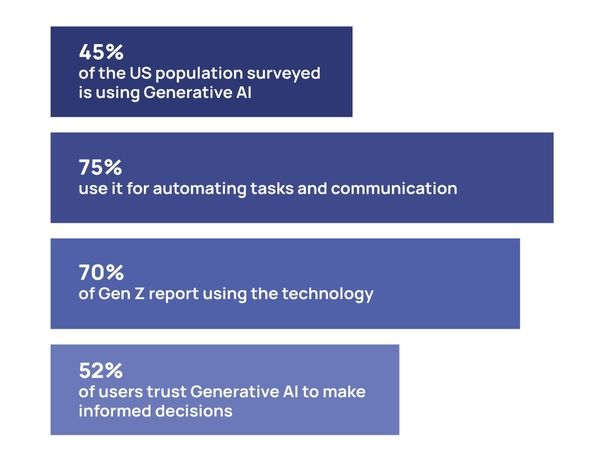
Generative AI is transforming product development by streamlining design, accelerating iteration, enhancing personalization, and improving how teams gather and apply insights. From research and ideation to prototyping, marketing, and delivery, it’s reshaping the entire product cycle. As teams adopt these tools, the real question becomes how does generative AI impact productivity in the workplace, especially when it helps cut delays, surface better insights, and keep work aligned with user needs.
Let’s look at how teams are using it in practice:
Speeding up Ideation and Design
Generative tools using AI for graphic design analyze trends and feedback to quickly produce diverse design concepts. Designers input themes or user preferences and instantly get multiple design directions. This speeds up idea generation and reduces early-stage delays.
Scaling Prototyping and Iteration
AI tools create multiple prototype versions in minutes, letting teams test and tweak quickly. Real-time feedback and fast iteration lower the cost of mistakes. This shortens time-to-market and increases flexibility.
Extracting Insight from Customer Feedback
AI scans thousands of reviews and surveys to highlight key themes and pain points. Teams use these insights to guide feature development and prioritize fixes. This replaces anecdotal input with real data.
Predicting Needs and Personalizing Recommendations
GenAI forecasts user needs based on behavior and timing, then suggests relevant products or packages. It can also generate personalized outreach for sales teams. This helps companies act before customers ask.
Powering Custom Marketing Content at Scale
AI generates large volumes of targeted marketing content across formats and audiences. Teams save time by automating repetitive writing. This frees up focus for strategy, testing, and creative work.
Marketers predict [generative AI will save them five hours of work per week](https://www.salesforce.com/news/stories/generative-ai-statistics/), which amounts to over a month per year. That’s a measurable impact on bandwidth, especially when scaling across teams.
Enabling Smarter Customer Interactions
AI chatbots now handle complex questions, guide users to better options, and flag upsell chances. They use past interactions to improve future ones. This creates smarter, faster support and sales.
Automating Competitive and Market Analysis
GenAI scans external data to compare competitors and identify feature gaps or positioning tweaks. Product teams get regular insights without manual research. This keeps your strategy in sync with the market.
Identifying Risk and Improving Product Resilience
AI simulates user behavior and stress tests products to catch bugs and edge cases. It also models cyber attack scenarios for digital products. Early detection avoids costly failures post-launch.
Supporting Sustainable Design and Production
AI suggests efficient layouts and material choices that cut waste without compromising function. This supports faster, cheaper, and greener production. It’s especially useful for supply-limited industries.
Enhancing Collaboration and Creativity
AI tools help teams brainstorm, compare concepts, and avoid creative blocks. They offer new directions based on past work and user input. This keeps collaboration smooth and ideas flowing under pressure.