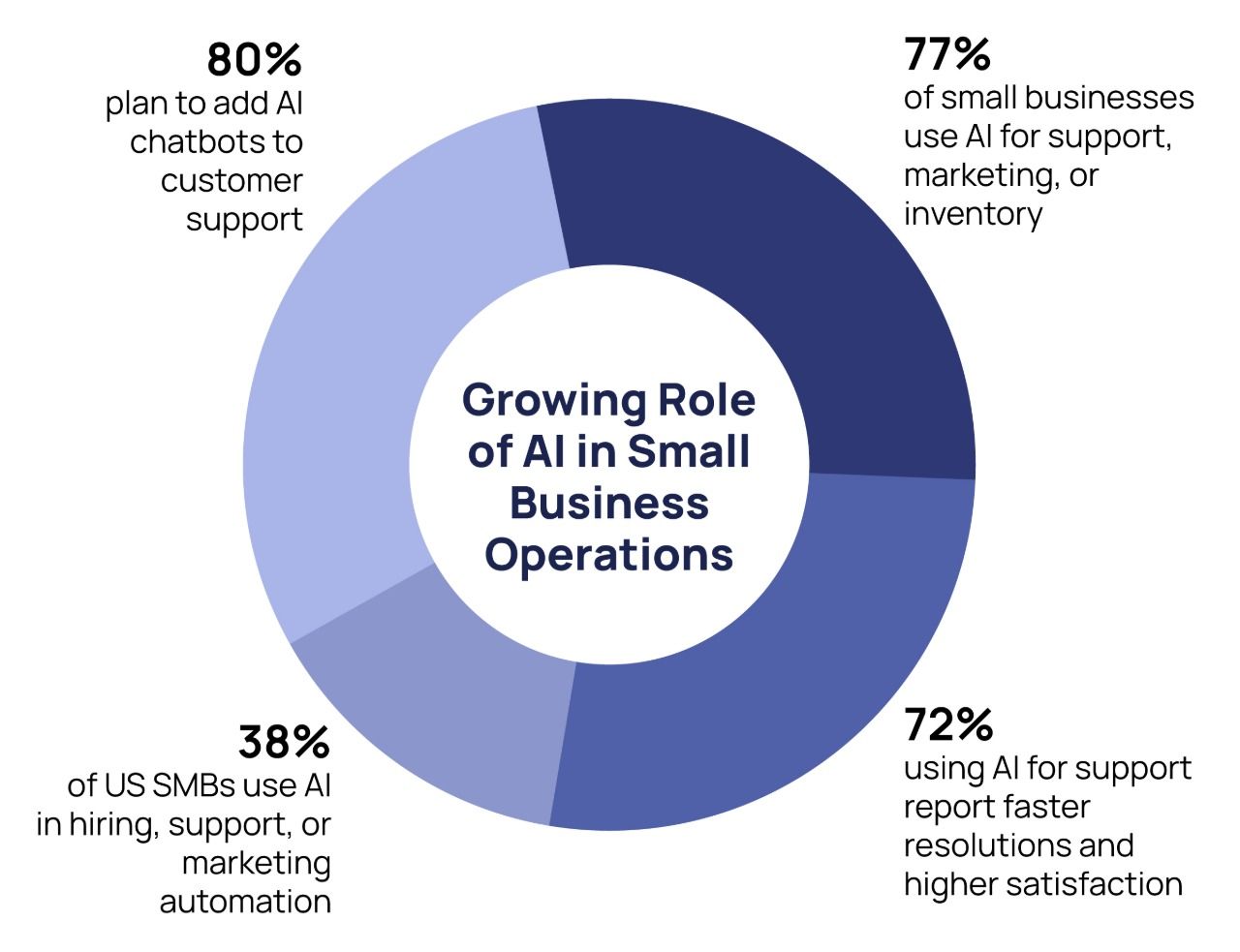
You don’t need a big team or budget to start using AI. With the right tools, you can simplify daily tasks, get insights from your data, and support your team more effectively. That’s how AI for small business growth starts through real, actionable improvements.
Let’s look at a few practical ways to use AI for small business:
Write Better Emails Faster
AI can help you write clear, effective emails without spending too much time. You can get suggestions for subject lines, tone improvements, grammar fixes, and even complete drafts. This helps you move quickly and sound more professional. Always review the content before sending, but let AI marketing tools for small businesses help you get unstuck or polish your message.
Use Smarter Chatbots for Customer Support
Modern AI chatbots don’t just give scripted replies, they understand and respond more naturally. You can use them to answer customer questions, take orders, or guide visitors through your website. Begin by considering what your customers need most. Select a chatbot tool that aligns with your technical expertise and business objectives. Some options require no coding and work well for AI for customer outreach.
Simplify Your Accounting Tasks
AI can sort transactions, catch unusual activity, and help you stay on top of cash flow. It can also predict trends using past data and streamline tasks such as invoicing or expense management. These AI tools for productivity are now being integrated into many accounting platforms you may already use, making them easier to adopt without a significant learning curve.
Make Your CRM Smarter
AI-powered CRM tools can help you gain a deeper understanding of customer behavior. You can receive recommendations on when to follow up, which customers are likely to buy again, or which promotions to run. AI can also improve sales forecasts by analyzing your past performance and current trends. This level of AI-driven analytics provides you with better insights for planning and decision-making.
Speed up Content Creation
When you’re short on time, AI can help you write drafts, revise existing content, or come up with ideas. You can use it for blog posts, product descriptions, captions, and more. These are good examples of AI in small businesses that reduce workload while improving output. Ensure you review the content before using it.
Get Better Market Insights
AI can collect and analyze data from surveys, social media, and website traffic. It helps you identify patterns, predict market changes, and gain a deeper understanding of your customers. This is part of how to utilize artificial intelligence in marketing for more precise targeting. You can also track competitors and break your audience into clear segments.
Strengthen Cybersecurity
AI tools can monitor for threats in real time and alert you if something appears suspicious. They analyze large amounts of data quickly to detect malware, phishing, and other risky behaviors. You can also use AI to sort risks by priority and automate some responses, saving you time and reducing exposure.
Improve Your Hiring Process
AI can help you write more precise job descriptions and sort through resumes faster. It compares skills and experience to your job needs and flags good matches. You can also use it to find candidates by scanning public profiles and databases. That’s small business automation in your HR process.